
The Center That Has Always Held
There is something unusual about a town center that has remained genuinely central for more than 200 years. American cities have a habit of abandoning their downtowns , moving commercial life to the strip mall, the shopping center, the interstate corridor, anywhere with parking and visibility that doesn't require navigating the tight geometry of a 19th-century street grid. Shelbyville's courthouse square has resisted that drift more successfully than most. In 2026, it remains a functioning civic and commercial hub, not a museum piece or an entertainment district built on nostalgia, but a place where actual civic life , courts, county government, local business, social gathering , happens in the same space it has occupied since 1810.
That persistence isn't an accident. It's the result of the square's design, the community's ongoing investment in its maintenance, and a series of decisions over the decades to treat the square as a living institution rather than a historical relic. Understanding why the square has lasted requires understanding how it was built and what it was built to do.
1810: The Survey That Shaped Everything
Bedford County was established by the Tennessee legislature in 1807, carved from Rutherford County and Indian lands. Shelbyville was designated the county seat and laid out by surveyors in 1810 , the same year the first courthouse was constructed on the northwest corner of the public square. The courthouse was a small wooden structure, a temporary measure while the community found its economic footing, but the square itself was drawn with the precision and intention that would define it permanently.
The design , courthouse block at the center, streets entering from the midpoints of each side rather than the corners , was so effective and so replicable that it spread across the American South and Midwest over the following century. Architectural and planning historians have documented it as the "Shelbyville Plan," the earliest documented use of the mid-block entry courthouse square in American urban design. Hundreds of county seats adopted the pattern; Shelbyville's is the template.
The first of five courthouses sat at the square in 1810, according to the Bedford County Historical Society. The courthouse that stands there today is the product of rebuilding following the December 1924 fire set by a mob , a painful chapter in Shelbyville's history that left a physical mark on the square's built environment. The current Bedford County Courthouse, rebuilt after the fire, anchors the square today and remains the center of county government operations.
Two Centuries of Commerce
The businesses that have surrounded the Shelbyville square across two centuries tell the story of how American commercial life has changed. The 19th century brought lawyers, merchants, general stores, and the professional offices that clustered around a county seat's courthouse. The Goodspeed history of Bedford County recorded a commercial district of considerable vitality by the late 19th century, with the square serving as the commercial center for a county that was, in 1830, the most populous in all of Tennessee.
The 20th century brought the same pressures that reshaped downtowns across America , the automobile, the strip mall, the suburban shopping center. Shelbyville was not immune to those forces. The commercial district along the square contracted as chain retail moved to the US-231 corridor. But the square never emptied entirely, and the anchor institutions , the courthouse, the legal offices, the long-established businesses , maintained enough activity to prevent the desolation that befell many comparable American downtowns.
The Shelbyville Times-Gazette, the county's newspaper of record, has noted that the square serves "not only as the center of Bedford County but also as the center of business development in the County's 200-year history." That continuity , the same physical space as the center of commerce across two centuries of economic change , is genuinely remarkable and worth appreciating.
The Historic District and National Recognition
The Shelbyville Courthouse Square Historic District's listing on the National Register of Historic Places represents formal federal recognition of the square's architectural and historical significance. The district encompasses the courthouse block and the surrounding commercial and residential buildings that constitute the area's built heritage.
The district's architectural character reflects multiple periods of construction and renovation. The brick cornices and window arches that characterize the most distinctive storefront facades were crafted in the 19th century and represent the quality of construction that was expected for buildings on a county seat's main square. These architectural details , which journalist Tina Neeley of Good News Exchange has described as "remnants of the 19th century adorning the storefronts as if guarding the memories of generations past" , are the visible evidence of the investment that generations of Shelbyville merchants made in the physical fabric of the square.
The East Shelbyville Historic District, listed separately, covers the residential neighborhoods that developed adjacent to the commercial core, beginning with residences built in the early 19th century. Together, the two historic districts document the physical development of Shelbyville from its founding through the mid-20th century.
Glass Hollow and the Current Revival
The most visible emblem of Shelbyville's current downtown revival is Glass Hollow Table and Tavern, at 123 S Side Square. Owner Jeb House has undertaken the renovation of a 42,000-square-foot complex in the historic district , an ambitious project that combines historic preservation with new commercial development in a way that exemplifies what effective downtown revival looks like.
House's stated vision for the project captures the dual mandate of downtown preservation work: "I have two passions for Glass Hollow. The first has been to renovate our 42,000-square-foot complex by preserving and reviving its historical aspects. We've put much time and effort into this regard, and I believe it will truly be showcased once we are finished. My second passion is to create a thriving business in my hometown. I want to build something our folks can be proud of." The restaurant has already established itself as Shelbyville's premier dining destination; the broader complex renovation continues.
The Glass Hollow development is part of a broader pattern of investment in the courthouse square area. The Nearest Green Distillery's success at 500 Gordon Lane has drawn visitor traffic from Nashville and beyond, creating economic conditions that support new business formation in the downtown. The city received a Municipal League award for Excellence in Downtown Revitalization , recognition that Shelbyville's approach to its downtown has been more effective than most comparable Tennessee cities manage.
The Square Today: What You'll Find
A walk around the Shelbyville courthouse square in 2026 reveals a commercial district in active transition , some storefronts occupied by established businesses, others in renovation, a few still awaiting their next chapter. Pope's Cafe at 120 E Public Square has been serving food since 1945 and shows no signs of stopping. Legal offices, financial services, and professional firms occupy the buildings that have housed similar businesses for generations. Heritage Jewelers carries Walking Horse-themed merchandise that reflects the square's connection to Shelbyville's equestrian identity. The Capri Theatre, with its preserved 1950s marquee, operates as a functioning cinema and historic attraction simultaneously.
The Fly Arts Center, adjacent to the square, provides cultural programming that extends the square's role beyond commerce into community arts and education. The Bedford County History Museum offers historical context for visitors who want to understand what they're standing in the middle of. And the courthouse itself , the center of the center , operates as it always has: processing the legal and administrative business of Bedford County in the same physical location where that business has been conducted since 1810.
The Shelbyville square is not perfect and it is not finished. But it is alive , genuinely, functionally alive in a way that the courthouse squares of many comparable American small cities are not. That aliveness is the product of 216 years of continuous use, ongoing investment, and a community that has understood, across multiple generations, that the center of a city is worth protecting.
Community Discussion
Sign in to join the discussion.
Be the first to comment on this story.

David Stemper
Editor & Publisher, Shelbyville Connect
David Stemper is a photographer, writer, and Bedford County resident who covers local history, community events, and everyday life in Shelbyville, Tennessee. His work spans historical research, local business features, and community storytelling rooted in primary sources and firsthand knowledge of the area.
About Us →More Stories to Read
From Eagle Boulevard to Calsonic Way: Why Shelbyville Families Stop Leaving
Read more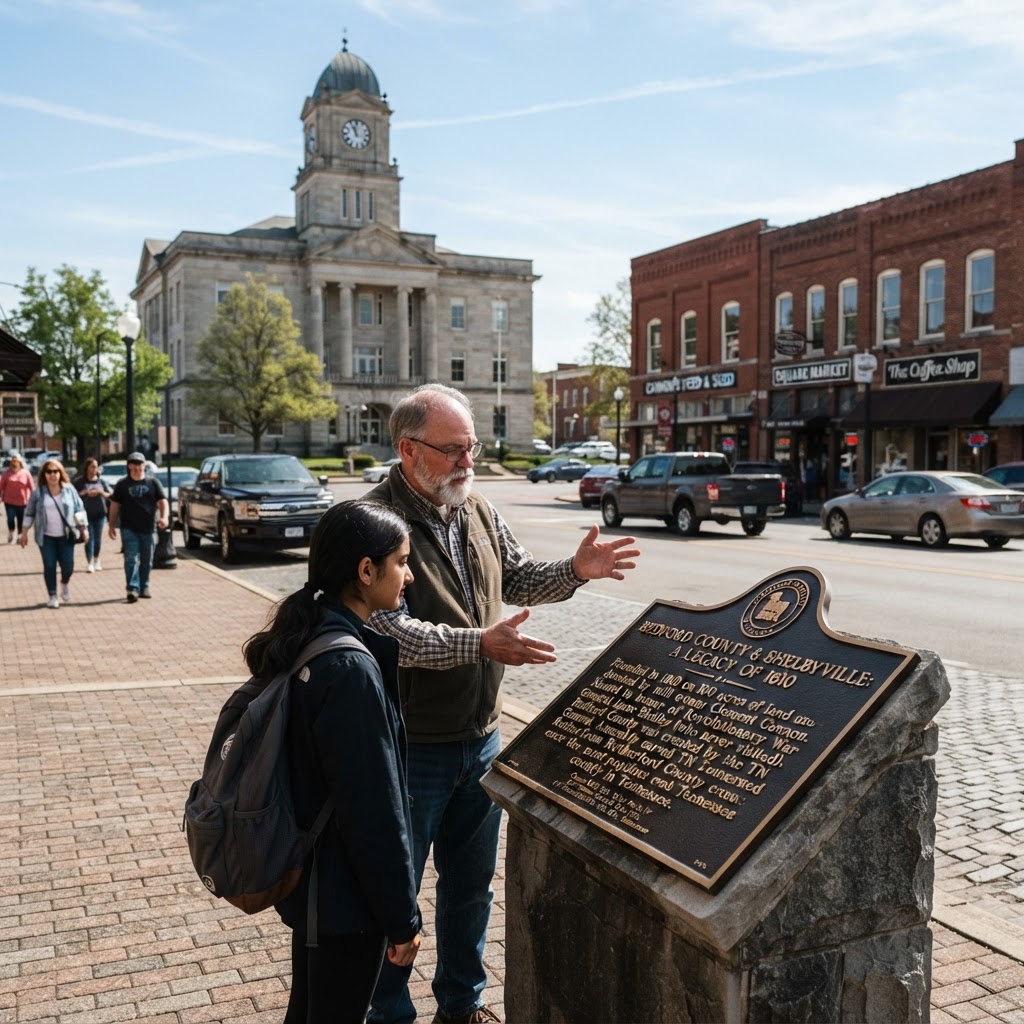
The 100-Acre Gift, the General Who Never Visited, and the County That Once Outpopulated Nashville
Read more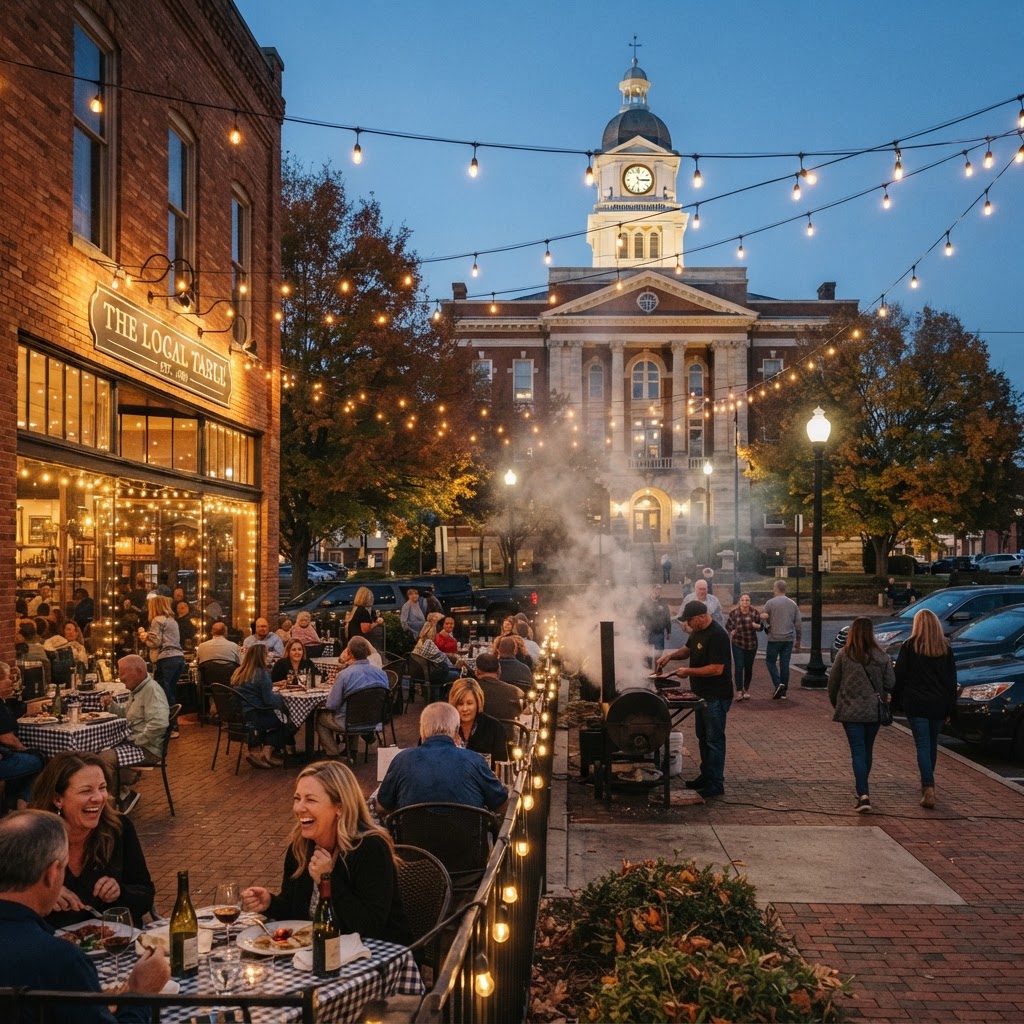
518 Feet of Bar and a Burger on the Square: Why Shelbyville's Food Scene Keeps People From Leaving
Read more