
Stand on the public square in Shelbyville, Tennessee, on a Tuesday morning when the courthouse is doing its business and the coffee shop has a line out the door. It feels permanent. Inevitable. As though the town were always going to be here, growing out of the soil like the crepe myrtles that shade the sidewalks. It was not. In 1810, this square was a field. The field belonged to a twenty-seven-year-old man with a grist mill, and he gave it away.
Clement Cannon was born in 1783 in Guilford County, North Carolina, the son of Minos Cannon, a Continental Army veteran who moved his family south after the Revolution. One of five brothers. The Cannons arrived in Middle Tennessee in the 1790s, settling in the country south of the Duck River where the land was cheap, the timber was thick, and the water ran fast enough to turn a mill wheel. Clement built that mill. He operated it on the banks of the Duck. He ground other people's corn and took his share. By 1810, he owned enough acreage to donate a hundred acres for a new town.
He was twenty-seven. He had married Susan Locke on August 9 of that same year. And he handed a hundred acres of his own farmland to the county commissioners who had been tasked with finding a seat for Bedford County, within two miles of the geographic center, on the Duck River. They accepted. They called the town Shelbyville.
The General Who Never Came
Isaac Shelby never visited the town that bears his name. He was sixty years old when Clement Cannon signed over his land, living on his estate in Lincoln County, Kentucky, where he would die sixteen years later. But his name carried weight. Major General Isaac Shelby. Hero of the Battle of King's Mountain, where on October 7, 1780, he led Overmountain men from what is now Sullivan County, Tennessee, up a rocky ridge in South Carolina and broke the British left flank so completely that the loyalist commander, Major Patrick Ferguson, died on the slope with a dozen musket balls in his body. Shelby was described as a large man, six feet tall, sturdy, well-proportioned, with strongly marked features. The North Carolina legislature gave him a ceremonial sword and a pair of pistols. They called him Old Kings Mountain. He became the first governor of Kentucky in 1792, and the fifth governor in 1812, and he led the Kentucky militia at the Battle of the Thames in 1813, where the Shawnee leader Tecumseh fell. Congress awarded him a gold medal.
He never came to Shelbyville. There is no record of it. The town borrowed his name because his name meant something in 1810. It meant courage, and victory, and the kind of frontier competence that settlers on the Duck River admired. They named their town for a man they had never met, who lived in another state, and who would be dead before the town turned twenty.
The Dead Man Who Gave the County Its Name
Thomas Bedford Jr. was gone before the county existed. The act of the Tennessee legislature that created Bedford County on December 3, 1807, says so in its own language: "in memory of Thomas Bedford, deceased." He was a Revolutionary War officer from Charlotte County, Virginia, and a large landowner in the Middle Tennessee country. He had invested in veterans' land warrants, thousands of acres south of the Duck River, on the strength of grants issued for service in the Revolution. He died in 1804, three years before the legislature honored him. He never saw the county that carried his name.
So the county was named for a dead Virginian. The town was named for a living Kentuckian who never visited. And the ground they both sat on came from a twenty-seven-year-old mill owner who would watch the town rise from his own front porch and be buried in a cemetery that still carries his family name.
Before the Square, There Was a Widow's Parlor
Before there was a courthouse, the courts of Bedford County met at the house of Mrs. Payne, near the head of Mulberry. The 1807 act that created the county specified it. The legislature directed that courts would be held there until the next General Assembly could arrange something more permanent. Mrs. Payne's house. A widow's parlor, probably, where the first justices of the peace unrolled their papers and held court over whatever furniture the county could borrow. Two years later, in November 1809, the legislature appointed commissioners to fix the county seat on the Duck River, within two miles of the center. The first courthouse was a wooden structure built in 1810 on the northwest corner of the public square. Gone now, replaced, burned, rebuilt. But the square itself is the same one Clement Cannon's hundred acres created.
The Cannon Brothers
Clement Cannon's older brother was Newton Cannon, born in 1781, also in Guilford County. Newton went into politics. He served in the Tennessee state senate in 1811, representing Williamson, Rutherford, Maury, Bedford, Lincoln, and Giles counties, a district so vast it covered half of Middle Tennessee. He fought in the Creek War under Andrew Jackson. He served in the United States Congress. And he developed a loathing for Jackson so thorough that it defined his career. Three stories explain it: he lost money gambling at Jackson's racetrack in Clover Bottom, Jackson shook his fist at Cannon after a jury acquitted a man Jackson wanted convicted, and Jackson exposed Cannon's men to needless danger during the Creek War. Whatever the cause, Newton Cannon spent his political life opposing Jackson, aligning himself with Davy Crockett and John Williams against the Jackson machine.
In 1835, Newton Cannon was elected the eighth governor of Tennessee. The first Whig to hold the office. He defeated William Carroll, who was seeking a fourth consecutive term, by arguing that the new state constitution of 1834 did not reset the term-limit clock. The voters agreed. Cannon served two terms, pushed for public schools and a state bank, lost to James K. Polk in 1839, and died in 1841 at the age of sixty. Cannon County, Tennessee, is named for him.
Clement, meanwhile, stayed home. He ran his mill. He raised five sons and two daughters. He became a manufacturer and a Whig political leader, the kind of small-town civic figure whose influence shows up in county records and cemetery inscriptions. He died in 1860, at seventy-seven, and was buried in Cannon Cemetery in Shelbyville. The ground he donated for the town is still there. So is the cemetery.
Eight Thousand to Thirty Thousand in Twenty Years
The 1810 census counted 8,242 people in Bedford County. By 1820, the number had nearly doubled: 16,012. By 1830, it had nearly doubled again. Thirty thousand, three hundred and ninety-six people. Bedford County was the most populous county in the state of Tennessee. Davidson County, home of Nashville, counted 28,122. Bedford had 2,274 more. This was cotton country. The soil along the Duck River was rich and dark, the kind of bottomland that produced four hundred pounds of lint per acre in a good season. Planters arrived from North Carolina, Virginia, South Carolina, and Georgia. They brought enslaved labor. They cleared timber. They planted cotton and corn and built gin houses and commissaries and railroad depots. The county surveyor, a man named Malcom Gilchrist, measured the county at thirty-six miles east to west with a mean width of twenty-three or twenty-four miles. Judge H. L. Davidson, delivering the centennial address in Shelbyville on July 4, 1876, called it a magnificent territory.
It was. And then it was not.
The Carving
The Tennessee Constitution of 1834 contained a special provision just for Bedford County. It said Bedford could be reduced to four hundred and seventy-five square miles, and that no new county line could run nearer than eleven and a half miles from the seat of justice. In 1836, the legislature cut Coffee County off the eastern edge. In 1837, Marshall County came off the west. At least a third of Bedford's territory was gone. The 1840 census counted 20,546 people. A loss of nearly ten thousand in a decade, not because anyone left, but because the lines on the map moved.
The county kept shrinking. Moore County was carved from parts of Bedford and Lincoln in 1871. What had been the largest and most populous county in Tennessee was now 475 square miles. Still rich. Still productive. But no longer the center of anything except its own history.
What Remains
The square that Clement Cannon's hundred acres created is still there. The courthouse in its center is the fifth one to stand on the spot. The first, a wooden structure built in 1810, was replaced by a brick building that a tornado destroyed in 1830. The third, built in 1831, was burned by Union soldiers in 1863. The fourth, described in its day as magnificent, rose between 1869 and 1873 and burned in December 1934 during mob violence. The fifth, a Greek Revival building constructed in 1935 for $175,000, stands on the same stone foundation as the one before it. Five courthouses. Two fires. One tornado. Two centuries of continuous use.
Clement Cannon is buried on a hillside in the cemetery that bears his name. The town he donated grew to 24,000 people. The county that was once the most populous in Tennessee now has about 50,000, spread across 475 square miles. The Duck River still runs through it. The cotton is gone, replaced by cattle and horses and the factories that make auto parts and pencil leads. The name Shelbyville still honors a general who never came. The name Bedford still honors a dead Virginian. And the hundred acres that a twenty-seven-year-old mill owner gave away in 1810 are still the center of everything that happens here.
Community Discussion
Sign in to join the discussion.
Be the first to comment on this story.

David Stemper
Editor & Publisher, Shelbyville Connect
David Stemper is a photographer, writer, and Bedford County resident who covers local history, community events, and everyday life in Shelbyville, Tennessee. His work spans historical research, local business features, and community storytelling rooted in primary sources and firsthand knowledge of the area.
About Us →More Stories to Read
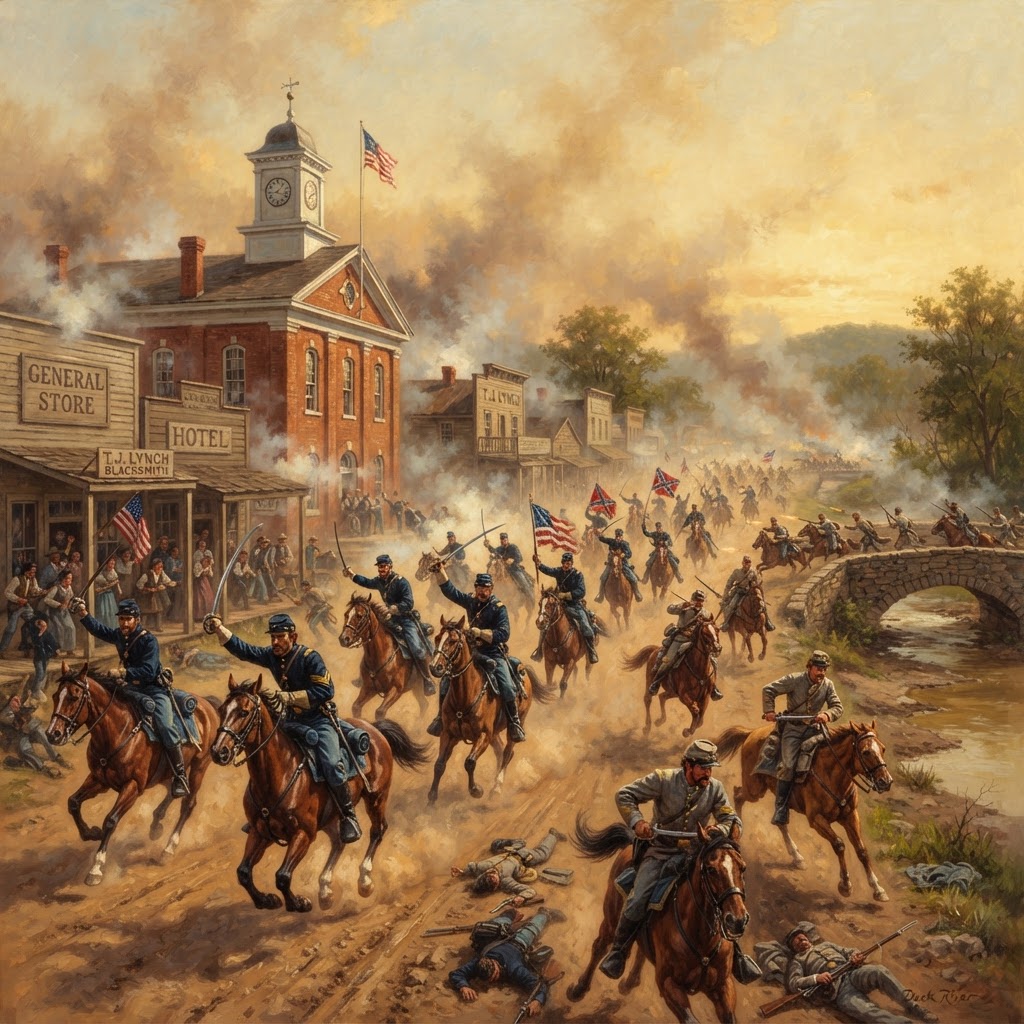
The Day 10,000 Cavalry Charged Through Shelbyville: A Town Called Little Boston and the Battle Nobody Remembers
Read more
The Dead Horse Behind the Wartrace Hotel and the $2,000 Show That Made Shelbyville Famous
Read more
Jack Daniel Called Him the Best. Shelbyville Put His Name on the Building.
Read moreFrequently Asked Questions
Who founded Shelbyville, Tennessee?
Clement Cannon, a 27-year-old grist mill operator, donated 100 acres of his own farmland in 1810 for the site of the town. He is buried in Cannon Cemetery in Shelbyville.
Who is Shelbyville named after?
Isaac Shelby, a Revolutionary War hero who led troops at the Battle of King's Mountain and served as the first and fifth governor of Kentucky. There is no record that he ever visited the town named for him.
Who is Bedford County named after?
Thomas Bedford Jr., a Revolutionary War officer from Charlotte County, Virginia, and a large landowner in the area. He died in 1804, three years before the county was created in his memory.
Was Bedford County ever the most populous county in Tennessee?
Yes. In 1830, Bedford County had 30,396 residents, making it the most populous county in the state, surpassing Davidson County (Nashville) by 2,274 people.
Why did Bedford County shrink in size?
The Tennessee Constitution of 1834 allowed Bedford to be reduced to 475 square miles. Coffee County was carved off in 1836, Marshall County in 1837, and Moore County in 1871, cutting the county to roughly two-thirds of its original territory.