
A Secret Sliding Through Bedford County
The Duck River does not announce itself. It slides through Bedford County like a secret being told in a low voice, wrapping around the western edge of Shelbyville in lazy S-curves that most people driving Highway 41A will never notice from the road. You have to get out of your car and walk down to the bank to understand what is happening here.
What is happening is this: 150 species of fish. More than 50 species of freshwater mussels. More aquatic biodiversity than nearly any river on the continent, a living catalog of creatures that have been filtering and spawning and adapting in this waterway since before Europeans ever set foot in Tennessee. The U.S. Geological Survey calls it one of the most biologically diverse rivers in the world. The Nature Conservancy describes its mussel communities as globally significant. Scientists from the University of Tennessee study its genetic mysteries. And on a Saturday morning in September, a guy in a kayak is five minutes from downtown Shelbyville, reeling in a smallmouth bass.
That tension, the one between ecological significance and everyday accessibility, is the defining quality of outdoor life in Shelbyville.
Fisherman's Park and the Surrounding Trails
Fisherman's Park sits on the Duck River within the city limits. A dam creates a small waterfall that thunders during wet months and calms to a silky cascade in late summer. Banks are open for fishing. The boat ramp gets busy on weekends. The Shelbyville Recreation Center has been organizing kayak races along the river from the Highway 82 Bridge to the park, turning a quiet waterway into a community gathering point. You can put a canoe in at Three Forks Bridge and float down to the Highway 41A bridge near town, a route the Tennessee Wildlife Resources Agency specifically recommends as a good paddling and fishing float. Smallmouth bass, rock bass, largemouth bass, and even stocked trout in certain seasons all run through this stretch.
The river is a headline, but Shelbyville's outdoor identity does not stop at the waterline.
The town sits within easy driving distance of Henry Horton State Park, where the Duck River features prominently and trails wind through middle Tennessee hardwood forest. Normandy Dam, upstream, creates a reservoir popular for boating and bank fishing. Short Springs State Natural Area, about 20 minutes north, offers a moderately strenuous hike to a 60-foot waterfall through old-growth timber. The Highland Rim's rolling terrain, with its limestone bluffs and cedar glades, makes this stretch of Tennessee quietly beautiful in a way that never makes magazine covers but keeps the people who live here hooked.
What makes all of this work as a lived experience rather than a weekend trip is that you do not have to leave town to reach it.
The Practical Math of Living Here
Consider the practical math of living here. The median sale price for a home in Shelbyville sits around $304,000, with listing prices hovering near $343,000 as of mid-2026. Compare that to Nashville, where entry-level homes routinely start $100,000 to $150,000 higher, and the appeal becomes immediate. Bedford County's property taxes remain modest. The cost of groceries, utilities, and fuel tracks below state and national averages. A household earning the area's median income can own a three-bedroom home with a yard, fund a retirement account, take a vacation, and still not feel financially brittle at the end of the month.
That calculation is drawing people. Shelbyville's population hovers around 25,000 in the broader micropolitan area, and Bedford County has been growing steadily through the 2020s. The commute to Nashville runs about an hour, close enough for professionals who need city access but want rural or small-town life the other six days of the week. New residents include remote workers from out of state, families priced out of Williamson and Rutherford counties, and retirees who did the math on Social Security and realized their dollar triples here compared to coastal cities.
Care and Community in Bedford County
Healthcare, often a weakness in rural Tennessee, is genuinely a strength. Vanderbilt Bedford Hospital, located on Highway 231 North, earned a four-star rating from the Centers for Medicare and Medicaid Services, placing it in the upper tier of hospitals nationally. The facility operates as part of the Vanderbilt University Medical Center network, which means access to one of the Southeast's most respected academic medical systems without driving to Nashville for most procedures. The hospital even serves as the official healthcare provider of the Tennessee Titans, a detail that sounds almost too specific to be true but happens to be factual.
Schools follow a similar arc of competence. Bedford County operates 15 schools plus an alternative learning academy, serving roughly 5,000 students across the district. Dr. Tammy Garrett leads the system as superintendent, and the district has made visible investments in teacher development and student support programs. Class sizes remain manageable. The schools reflect the community's growing diversity; 53.8% of the city identifies as white, 31.2% as Hispanic, 9.3% as Black, figures that tell a story of a small Southern town that is increasingly multiethnic and multilingual. Sports programs, particularly football and baseball, serve as community anchors in a way that feels almost archetypal for middle Tennessee.
Gathering on the Historic Public Square
Then there is the downtown. The Public Square in Shelbyville still functions the way a town square is supposed to function. It is anchored by the Bedford County Courthouse, a Classical Revival building from the 1930s designed by the Nashville firm Marr and Holman, and ringed by storefronts that are, encouragingly, occupied. Not all of them, but enough.
Glass Hollow Table and Tavern, at 123 Southside Square, has become a genuine destination. Opened in a restored historic building on the square, it functions as an American steakhouse with a farm-to-table philosophy. The menu includes shaved prime rib egg rolls with candied jalapeño, craft ale cheddar pretzel bites, and steaks sourced from regional farms. They serve Wednesday through Saturday, 11 AM to 9 PM. Across the square, Grindstone Cowboy offers a looser atmosphere with live music on weekend nights. Pope's Cafe, a Shelbyville staple featured by Tennessee Crossroads, serves the kind of Southern plate lunches that make locals defensive about outsiders discovering them. Emmy's Restaurant, The Holy Crab Shack, and Southern Fare round out a dining scene that punches well above its weight class for a town this size.
The reason Glass Hollow matters beyond its food is that it represents a pattern. Small towns across the South struggle with empty squares. Shelbyville has people investing in theirs. That investment signals confidence in the town's trajectory. When a restaurateur commits to a downtown lease, hires a kitchen staff, and sources local ingredients, they are making a multiyear bet on the place. Enough of those bets, and the economic drift reverses.
Eleven Days of Celebration and Energy
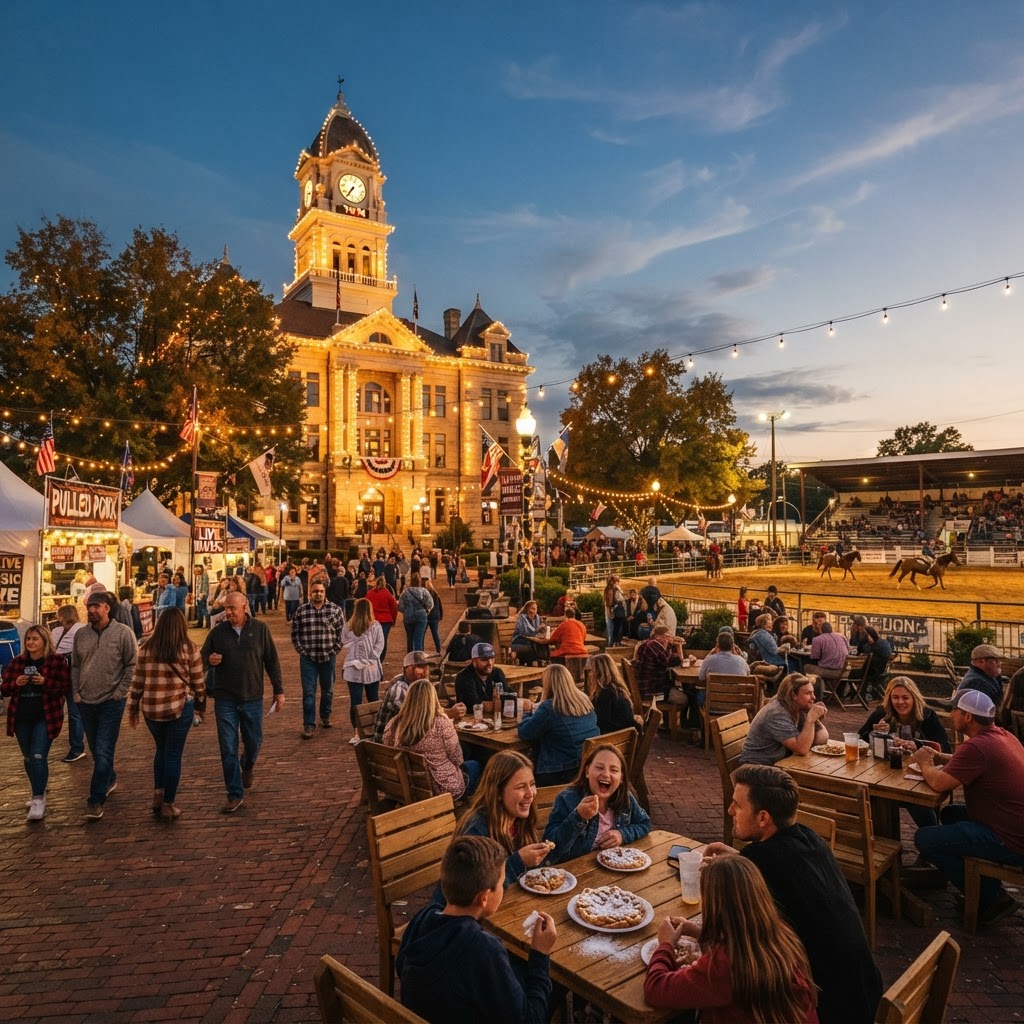
Community events anchor the calendar. The Tennessee Walking Horse National Celebration, held annually since 1938, brings over 2,000 horses and tens of thousands of visitors to a 100-plus-acre complex on Evans Street for 11 days in late August and early September. It is the largest single-breed horse show in the world and the largest event facility in Tennessee. The town's population effectively doubles during Celebration week. Hotels sell out. Restaurants run waiting lists. The whole place hums. Whether you care about walking horses or not, the energy is undeniable, and it represents something deeper: a community that knows how to host.
For anyone considering relocation, the practical case stacks up fast. Housing costs roughly 60% of Nashville prices. Healthcare access is better than most towns twice this size. Outdoor recreation is accessible from your doorstep. The job market is stable, with unemployment at 2.6% in the most recent data, and the proximity to Nashville opens creative and professional career paths that would normally require living in the metro itself. Bedford County's labor force exceeds 25,000, and the growth curve has been steady rather than speculative, meaning the economy is real rather than inflated.
Friction, Trade-Offs, and the Accumulation of Life
Here is the honest part. Shelbyville is not perfect. The square has vacant storefronts. Some county roads need repair. The Walking Horse industry carries complicated history. The pace of growth has created tension between longtime residents and newcomers, a familiar friction in every small Tennessee town that has caught Nashville's overflow. Internet speeds can be inconsistent outside the city limits. Not everyone will love the humid summers or the relative quiet of a Saturday night in January.
But the trade is real. You give up urban density, ride-share availability, and the particular buzz of a big city on a Friday night. What you get back is space, a river full of creatures that exist almost nowhere else, a hospital that outperforms expectations, schools that know your kid's name, and a community where showing up at a Friday football game or a Wednesday lunch at Pope's still counts as civic participation.
Shelbyville's best argument is not any single feature. It is the accumulation. The river plus the square plus the hospital plus the housing cost plus the school plus the Celebration plus the commute distance, all happening at a scale that a single person can comprehend and a single family can afford. That arithmetic is getting harder to find, and the people who find it tend to stay.
Community Discussion
Sign in to join the discussion.
Be the first to comment on this story.

David Stemper
Editor & Publisher, Shelbyville Connect
David Stemper is a photographer, writer, and Bedford County resident who covers local history, community events, and everyday life in Shelbyville, Tennessee. His work spans historical research, local business features, and community storytelling rooted in primary sources and firsthand knowledge of the area.
About Us →More Stories to Read
Eleven Nights, 250,000 Visitors, One Small Town: Why Shelbyville's Calendar Convinces People to Stay
Read more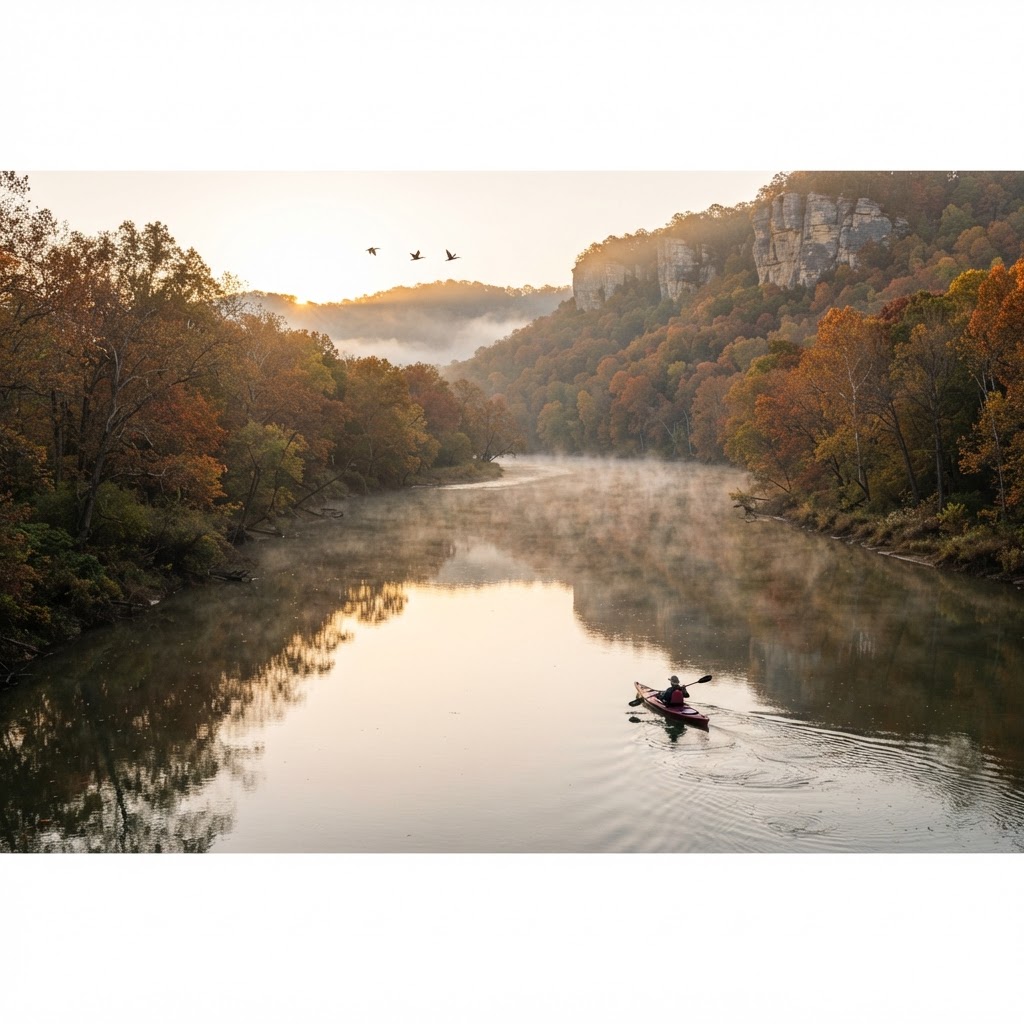
151 Fish, 56 Kinds of Mussel, and Two State Parks Within an Hour: Why Shelbyville Belongs to People Who Play Outside
Read more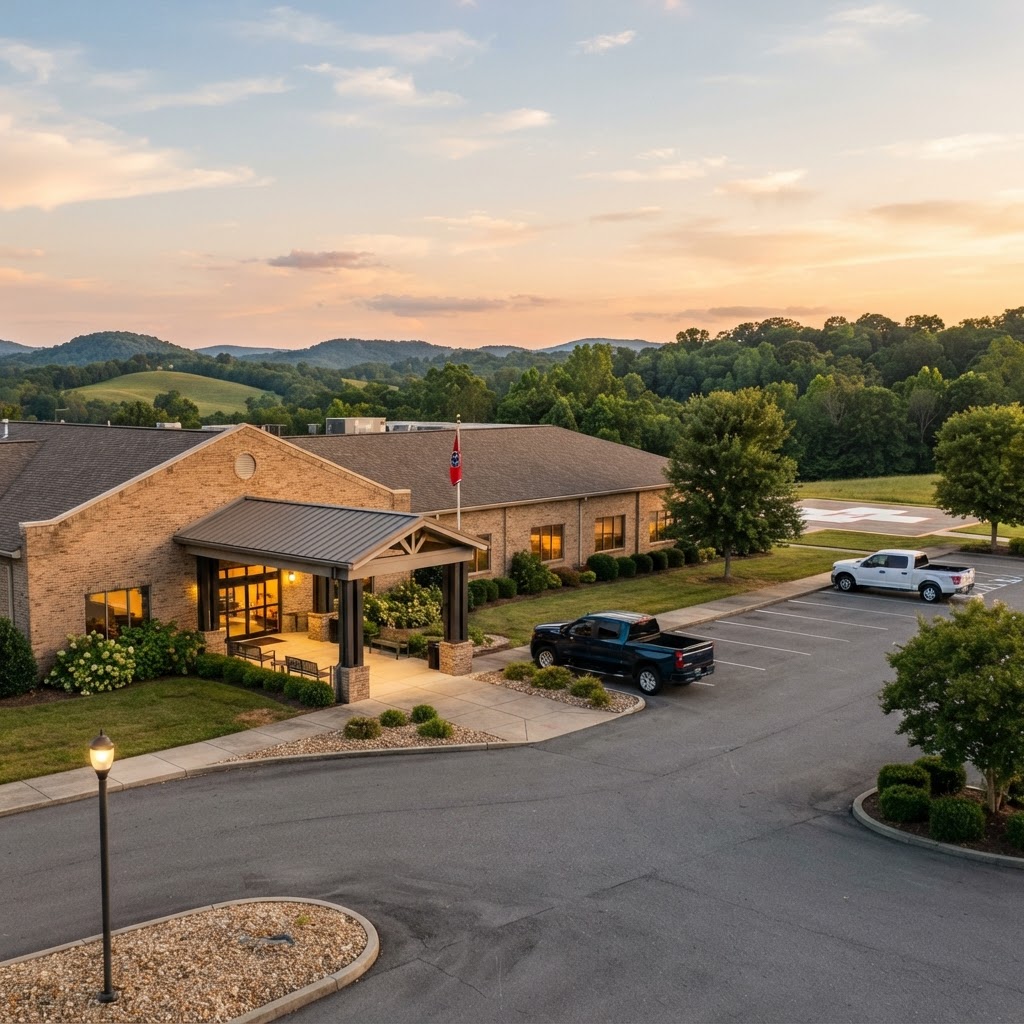
Sixty Beds, a Straight-A Report Card, and an Hour to a Level 1: Why Shelbyville Health Care Punches Above Its Weight
Read moreFrequently Asked Questions
What is the median home price in Shelbyville, TN?
As of mid-2026, the median sale price in Shelbyville is approximately $304,000, with listing prices averaging around $343,000, making it significantly more affordable than Nashville.
How far is Shelbyville from Nashville?
Shelbyville is approximately one hour's drive from Nashville, making it a reasonable commute for professionals who want small-town life with city access.
What makes the Duck River special?
The Duck River is one of the most biologically diverse rivers in North America, home to over 150 species of fish and more than 50 species of freshwater mussels, making it globally significant for aquatic conservation.
What hospital serves Shelbyville?
Vanderbilt Bedford Hospital, located on Highway 231 North, serves the Shelbyville area. It earned a four-star rating from the Centers for Medicare and Medicaid Services and is part of the Vanderbilt University Medical Center network.
When is the Tennessee Walking Horse National Celebration?
The Celebration runs for 11 days in late August through early September each year at the 100-plus-acre complex on Evans Street in Shelbyville, featuring over 2,000 horses competing in 200 classes.