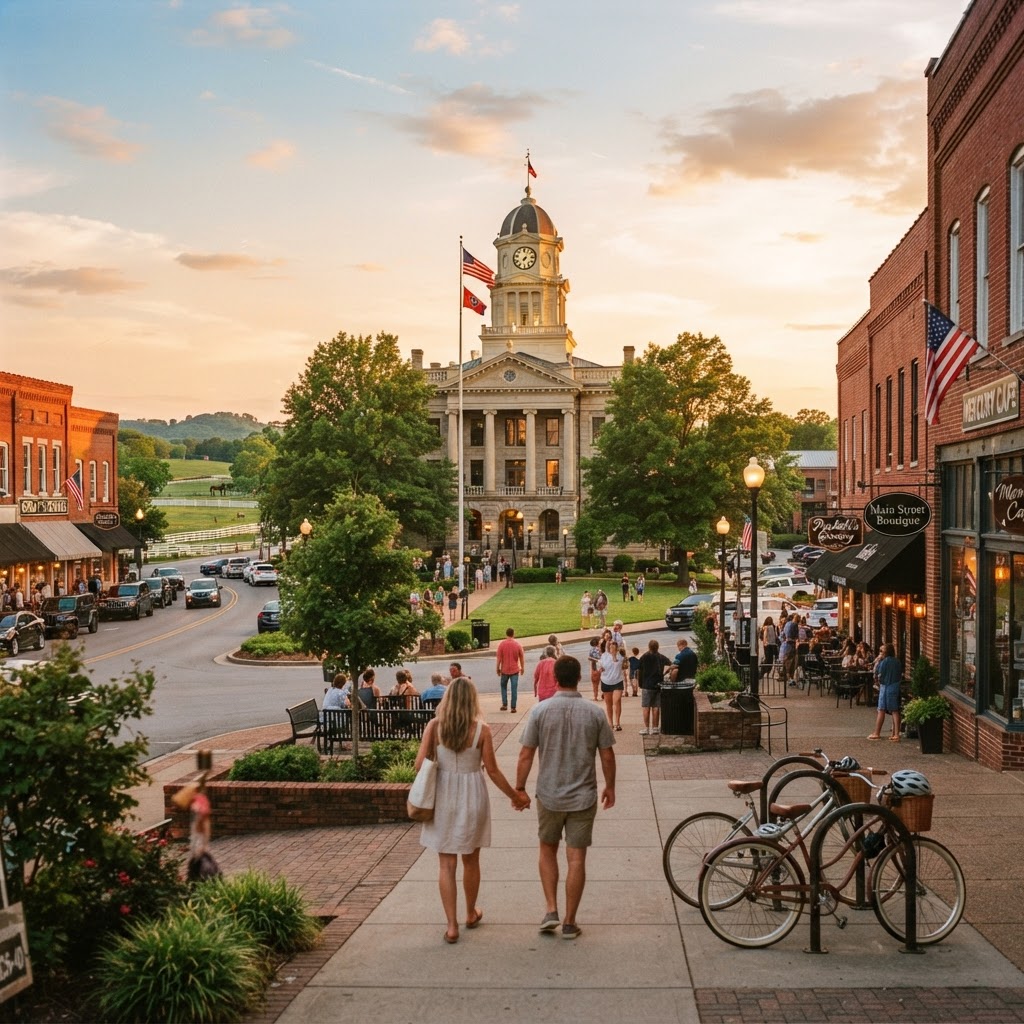
I once watched a man in waders pull a smallmouth bass out of the Duck River about two hundred yards from a Shelbyville gas station. He released it, waded back toward the bank, and was sitting in his truck within fifteen minutes. That is the whole argument for this town in one image. You can live your ordinary Tuesday, and the wild is still right there when the workday ends.
Outsiders tend to miss this. When people picture Tennessee outdoor towns they name Gatlinburg, or Knoxville, or maybe Cookeville. Shelbyville reads, from the interstate, like a manufacturing and horse country sort of place. Fine. Those of us who live here are content to keep the secret, but the secret deserves a proper telling, because the outdoor life here is not a hobby. It is infrastructure.
**A river that matters to the whole planet**
Start with the Duck, because everything else radiates out from it. The Duck River holds 151 species of fish, 56 species of freshwater mussel, and 22 kinds of aquatic snail. Scientists consider it the most biologically diverse river in North America, and among the most biodiverse on Earth. Let that settle. A waterway you can reach in five minutes from the public square competes, in raw species count, with rivers that have national parks named after them.
The mussels are the astonishing part. Some Duck River mussel beds hold more species in one riffle than entire states can claim. Each mussel filters gallons of water daily, which is why the river runs so stubbornly clear in late summer even when everything else around it bakes. The river earned a rough honor in 2024, when American Rivers named it among the most endangered rivers in the country, threatened by the very growth that Middle Tennessee cannot seem to stop. People move here for jobs and cheap houses. They stay, a lot of them, for the water.
**Paddle it before lunch**
The float starts upstream at Normandy Dam, where TVA maintains a proper boat access with parking about 3.2 miles northeast of the little town of Normandy. Paddle the first stretch below the dam and the water runs cold and green, and the trout are real; state biologists actually stock that tailwater, and locals pull rainbows out of it year-round. The Duck River Scenic Floatway picks up there and carries you downstream through farmland and hardwood bluffs toward Shelbyville itself.
Inside town, Fisherman's Park on the Duck River is the local put-in and take-out of choice. Kayakers use it constantly, and the float between there and the downriver bridges is gentle enough for a twelve-year-old on an inflatable. One caution worth repeating, because the Bedford County government repeats it too: the low-head dam near Cortner Mill, up toward Normandy, has shifted the current and built a dangerous strainer in the channel. Portage around it. Every long-time paddler here knows somebody who did not, and none of those stories end well.
Smallmouth bass are the river's prize, chubby and mean in the riffles, and the spring white bass run fills coolers all the way down to Columbia. The state wildlife agency manages the whole Duck as one of its showcase Middle Tennessee fisheries. The Shelbyville City Park also keeps a boat ramp on the river. On a Saturday in October you will see johnboats, kayak motherships masquerading as minivans, and at least one grandfather teaching a grandkid to cast a spinner. No permit bureaucracy. No launch fee worth mentioning. You show up, you get wet.
**An hour of state park, three directions**
Drive about half an hour northwest and you reach Henry Horton State Park at Chapel Hill, sitting on 4358 acres of Nashville Highway pine and hardwood. The park carries over ten miles of hiking trails, a full campground, and one of the finest trap, skeet, and archery ranges in the state park system. Golfers get the Buford Ellington course, a genuine 18-hole regulation layout playing over 7,000 yards at par 72. Try finding that amenity within thirty minutes of most towns this size. The park also protects a stretch of the Duck River itself, so a single afternoon can hold a round of golf, a range session, and a slow wade with a fly rod, with a hot shower at the campground before the drive home.
Head the opposite direction, southeast about forty minutes toward Winchester, and Tims Ford State Park opens up: 3,546 acres wrapped around one of the prettiest reservoirs in Tennessee, tucked under the brow of the Cumberland Plateau. Tims Ford Lake draws sailors and houseboats all summer. The park runs 168 campsites, walkable cabins near the marina, and its own golf course, the Bear Trace, one of Jack Nicklaus's Tennessee designs. The lake's sinuous coves mean you can spend years exploring it and still find an arm you have never fished.
Drive twenty minutes south for something quieter: Bell Buckle, Wartrace, and the walking-horse country lanes between them, where weekend cyclists grind up the ridges past century-old barns. Nobody charges you a dollar for it.
For plain hiking, the neighbors deliver too. Twenty-five minutes east in Tullahoma sits Short Springs State Natural Area, a pocket gorge where Machine Falls drops through a hollow so humid it grows ferns that belong in a different century. Twenty minutes southeast, at Manchester, Old Stone Fort State Archaeological Park wraps two miles of walls built by Native hands two thousand years ago around a river fork; the museum is free, the trails follow the bluffs, and schoolkids from three counties consider it their personal field trip. You could hike somewhere new every weekend for a year within forty minutes of the Shelbyville square.
**The part that changes how you plan your week**
Here is the practical relocation math nobody puts in a brochure. All of this fits inside an ordinary evening. Paddle after work. Fish until dark, then get barbeque. Ride road mileage on Sunday morning and still make church, if that is your arrangement. In a big metro, recreation costs you two hours of traffic as a cover charge. In Shelbyville the trailhead is closer than most people's gym.
The climate cooperates. Middle Tennessee winters are short and rarely brutal, so the paddling season here runs from roughly March into November, and the hardy keep going all year with a dry suit. Spring brings morel season in the woods and the white bass run in the river's forks. Summer means town pool days and night fishing under the Highway 82 bridge lights. Fall might be the best of all: dry air, campfires at Horton, and the Duck running slow and glassy between gold banks.
Costs stay mercifully low. A Tennessee fishing license runs cheaper than a single night out in Nashville. State park entry is free. Camping at Horton costs less than a tank of gas in most of the country. Add the absence of a state income tax on wages, which every relocation article mentions and which genuinely compounds, and the outdoor life here is arguably the cheapest serious outdoor life to be found anywhere within an hour of a major airport.
**Why it matters more than it sounds**
I have lived in places where nature was a production. You packed the car, fought traffic, paid for parking, and returned exhausted. That rhythm quietly kills the habit. Life gets busy, trips get shorter, and one year you realize you have not slept outside since the wedding. A town where the river runs through it, where two state parks sit within an hour, where your neighbor keeps a jon boat in the side yard next to the tomato cages, produces a different kind of resident. People here just are outdoors people, the way coastal people just are beach people, without anyone deciding it.
Families notice it first in their kids. Children raised here learn to cast, paddle, and identify a sycamore before they learn to rack up screen time, mostly because the alternatives are so available. Retirees notice it in their calendar, which fills with float trips and golf rounds instead of appointments. Remote workers, and there are more every year, discover that a lunch break can literally be a riverbank.
And there is the quiet civic effect. A town that plays outside together is a town that runs into itself constantly at the ramp, at the trailhead, at the range. That is how a place this size produces the volunteer civic culture it has. You cannot manufacture that in a subdivision with a pool. It has to be grown, and Shelbyville has been growing it for two centuries along a river that never once asked for a membership fee.
So yes, come for the housing prices and the factory wages and the forty-five-minute shot up I-24 or Highway 231 to Nashville when you need a proper airport. But understand what actually hooks the people who stay. Somewhere between the second cast and the first campsite, usually on water that Douglas Adams would have described as improbably rich in species for a town this small, this place stops being a bargain and starts being home.