
The Accident of Genius: 1810 and the Birth of a Model
Most great American innovations happen by intention. The Shelbyville Plan happened because someone needed a courthouse, and the people planning Shelbyville had to figure out where to put it. What emerged from that practical problem became one of the most influential pieces of civic architecture in American history, though almost nobody who walks those streets today realizes what they're standing in the middle of.
When William Shelby and the original surveyors laid out Bedford County's new seat in 1810, they faced the same challenge every new American town faced: how do you organize a town so that people can actually find things, commerce can happen, and government has a home. Colonial town planning inherited chaos from Europe. Streets wandered. Markets appeared wherever someone sold something. Government buildings got squeezed into whatever lot was available. Shelbyville's designers chose a different path. They put the courthouse in the center. Then they drew four streets directly into it, one from each corner direction. The courthouse block sat surrounded by a perfect grid. Everything else radiated outward in orderly lines. Simple. Efficient. Visible from anywhere in town because the courthouse sat at the heart of the sight lines.
It solved every practical problem a frontier county seat faced. Visitors could find the courthouse without asking for directions. Merchants could set up shops facing the square, guaranteed foot traffic. Residents could orient themselves by the central building. And the design had a secondary elegance: it worked at scale. Whether a town had 500 people or 5,000, the same grid pattern held. You could expand it outward and it still functioned.
The Prototype Effect: Why Other Towns Copied It
The Shelbyville Plan spread because it worked and because it looked intentional. Between 1810 and 1900, courthouse squares following the Shelbyville model became the dominant planning type for American county seats. In Texas alone, researchers have documented that 193 of the state's county seat squares, roughly 76 percent of all courthouse squares in the state, use the Shelbyville planning prototype. Other states followed the same pattern. The design wasn't legally mandated. It spread by example.
Travelers who had seen Shelbyville's square brought the idea to other towns. Surveyors who had worked on Tennessee projects imported it to new settlements. As Americans moved westward, the Shelbyville Plan went with them, adapted to local topography and local needs but recognizable in its core geometry. The courthouse sat central. The grid extended outward. Streets entered from the cardinal directions. It became so common that most people planning towns in the 19th century probably didn't think of it as the Shelbyville Plan anymore. They just thought of it as how towns got planned.
What made it remarkable was that nothing in American law or convention required the design. Unlike colonial Spanish town planning, which followed formal geometric rules mandated by the Spanish crown, or French radial designs imposed by royal decree, the Shelbyville Plan succeeded because it was both practical and pleasing. It served commerce and government and pedestrian life. It created a civic center that felt important without being oppressive.
The Architecture of Democracy
The Shelbyville courthouse square became something else besides a planning model: it became a statement about how American democracy should work. The courthouse at the center suggested that justice was accessible, visible, and central to community life. The grid radiating outward implied that all citizens had equal access to the center. The commercial buildings facing the square across equal distances suggested that market opportunity was distributed, not monopolized. None of this was necessarily intentional in 1810. But those spatial relationships sent a message anyway.
In the decades after the Civil War, as Shelbyville rebuilt itself and surrounding communities grew around their own courthouse squares, those spaces became literal stages for civic life. Citizens could gather in the square. Newspapers were published within sight of the courthouse. Merchants competed for customers in view of government. The physical arrangement of the town reinforced the idea that governance and commerce and public life were inseparable, transparent, and available to everyone.
Today, courthouse squares following the Shelbyville model still dominate the American small-town landscape. Walk through the downtowns of hundreds of towns across Texas, Tennessee, Kentucky, Alabama, and beyond, and you're walking through iterations of a design that originated in Shelbyville. The buildings are different. The architectural styles range from Federal to Italianate to Classical Revival to Art Deco. But the underlying geometry, the spatial logic, the relationship between the courthouse and the grid, traces back to 1810 and a group of surveyors in Bedford County who solved a practical problem and accidentally created a template.
What Shelbyville's Plan Reveals About American Town Design
The global dominance of the Shelbyville Plan says something important about American civic design. Americans generally prefer solutions that are both functional and democratically symbolic. The plan worked because it solved real problems and because it said something about how the nation wanted to see itself. It was orderly without being oppressive. Centered without being hierarchical. Practical without sacrificing meaning.
Most American town plans didn't come from grand vision or government mandate. They came from people solving immediate problems and then other people copying the solution because it worked. The Shelbyville Plan succeeded not because it was imposed from above but because it bubbled up from practical necessity and then spread by imitation and example. That pattern of innovation says something about how American civic culture actually works, as opposed to how it theorizes about itself.
The irony, of course, is that most people walking through these squares today don't think about Shelbyville at all. They're buying coffee, meeting friends, attending courthouse proceedings, looking for parking. They're living in the spatial consequences of a 216-year-old design decision, embedded in a framework that guided the layout of hundreds of American towns, but they're doing it unremarked. The greatest measure of the Shelbyville Plan's success might be that it became invisible, so fundamental to how we organize civic space that we stopped noticing it was there.
Community Discussion
Sign in to join the discussion.
Be the first to comment on this story.

David Stemper
Editor & Publisher, Shelbyville Connect
David Stemper is a photographer, writer, and Bedford County resident who covers local history, community events, and everyday life in Shelbyville, Tennessee. His work spans historical research, local business features, and community storytelling rooted in primary sources and firsthand knowledge of the area.
About Us →More Stories to Read

From Eagle Boulevard to Calsonic Way: Why Shelbyville Families Stop Leaving
Read more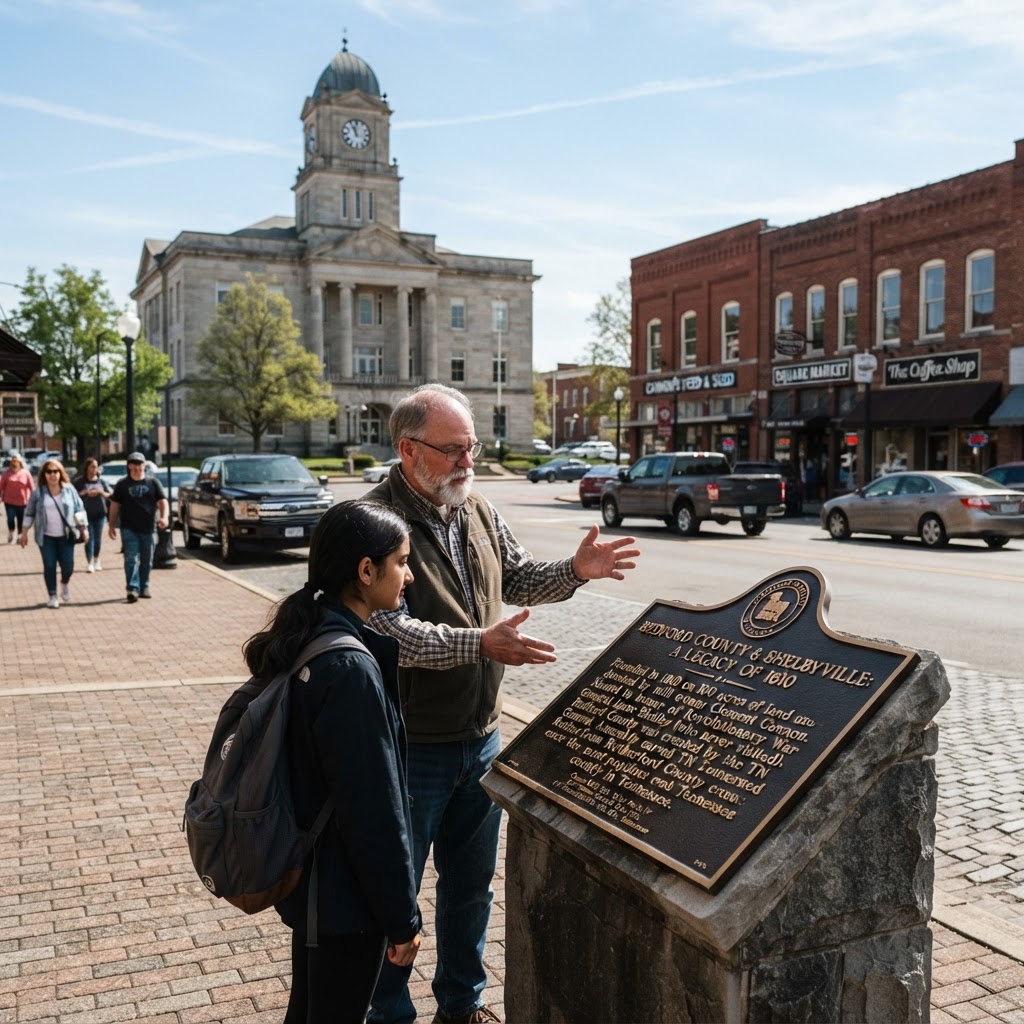
The 100-Acre Gift, the General Who Never Visited, and the County That Once Outpopulated Nashville
Read more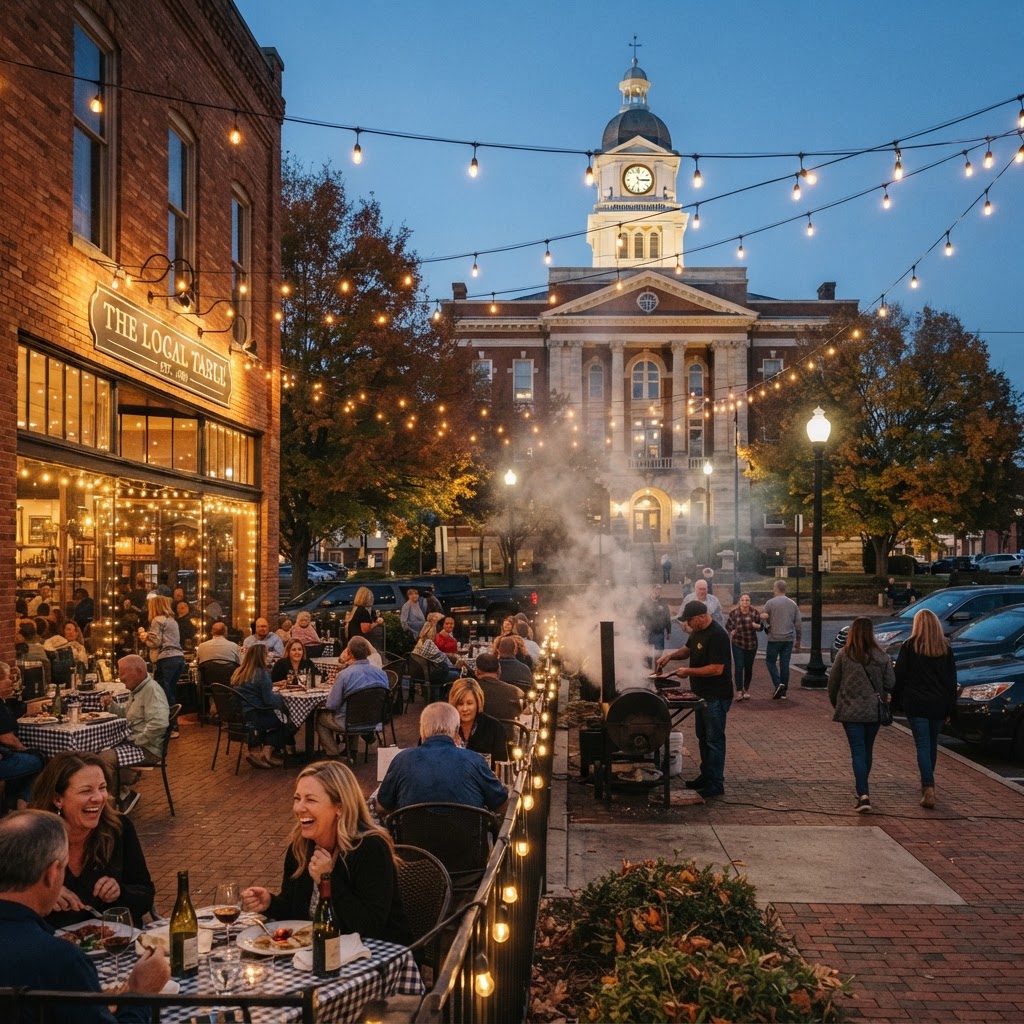
518 Feet of Bar and a Burger on the Square: Why Shelbyville's Food Scene Keeps People From Leaving
Read more